Supporting scholarship and promoting popular understanding of the American Revolution is central to the work of the American Revolution Institute. The Institute welcomes distinguished scholars and authors to share their insights and discuss their latest research with the public at Anderson House through lectures, author's talks and panel discussions. The Institute also hosts a variety of other historical programs throughout the year, including our Lunch Bite object talks, battlefield tours, special Anderson House tour programs and other events. Many of the events we offer are free.

October 2022
Author’s Talk – First Among Men: George Washington and the Myth of American Masculinity
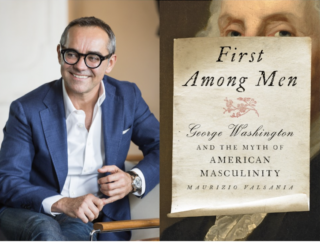
George Washington, hero of the French and Indian War, commander in chief of the Continental Army and first president of the United States, died on December 14, 1799. Shortly thereafter, the myth-making surrounding Washington began and has persisted today. Washington is frequently portrayed by his biographers as America at its unflinching best: tall, shrewd, determined, resilient, stalwart and tremendously effective in action. But this aggressive and muscular version of Washington is largely a creation of the nineteenth century. Eighteenth-century ideals…
Find out more »Panel Discussion – Women at War: Confronting Challenges in the American Revolution
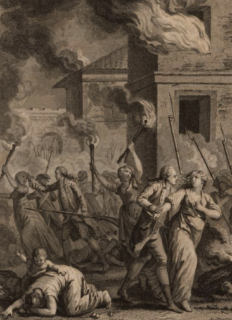
The Revolutionary War dramatically affected the speed and nature of broader social, cultural and political changes, including shaping the place and roles of women in society. Whether loyalist or patriot, indigenous or immigrant, enslaved or slave-owning, going willingly into a battle or responding when war came to their doorsteps, women participated in the conflict in complex and varied ways that reveal the critical distinctions and intersections of race, class and allegiance that defined the era. This panel will consist of…
Find out more »Livestream – Chinese Tea and American Rebels: The Global Origins of the Revolutionary Crisis
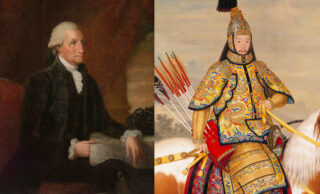
Watch live online as historian Nick Bunker delivers the annual George Rogers Clark Lecture. Drawing on his book, An Empire on the Edge, a 2015 finalist for the Pulitzer Prize for History, this lecture reexamines the Boston Tea Party and the onset of the revolution in Massachusetts in 1774, and places them in their global context. Making connections between events in China, India, London, and America, Bunker discusses how Britain’s commercial dynamism outstripped its political imagination and how a 1772…
Find out more »November 2022
Author’s Talk – Misinformation Nation: Foreign News and the Politics of Truth in Revolutionary America
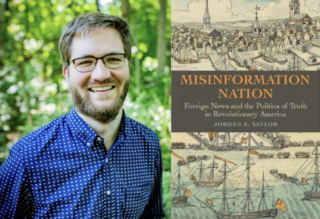
"Fake news" is nothing new. Just like millions of Americans today, the revolutionaries of the eighteenth century worried that they were entering a "post-truth" era. Their fears, however, were not fixated on social media or clickbait, but rather on peoples' increasing reliance on reading news gathered from foreign newspapers. News was the lifeblood of early American politics, but newspaper printers had few reliable sources to report on events from abroad. Accounts of battles and beheadings, as well as declarations and…
Find out more »Lecture – The Other 1776: Reform and French Military Dress in the Late Ancien Regime
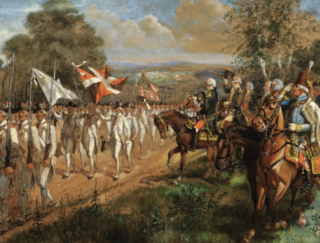
Following its catastrophic defeat in the Seven Years’ War, the French military undertook a comprehensive series of reforms affecting everything from warship design to soldiers' uniforms, which dramatically altered the army’s appearance. This uniform provided unheard-of amenities for French soldiers but was widely disliked and quickly replaced. The fallout surrounding the 1776 uniform reflects the most consequential moment of the eighteenth century for the material culture of the French military. Far from being an emblem of a staid or conservative…
Find out more »